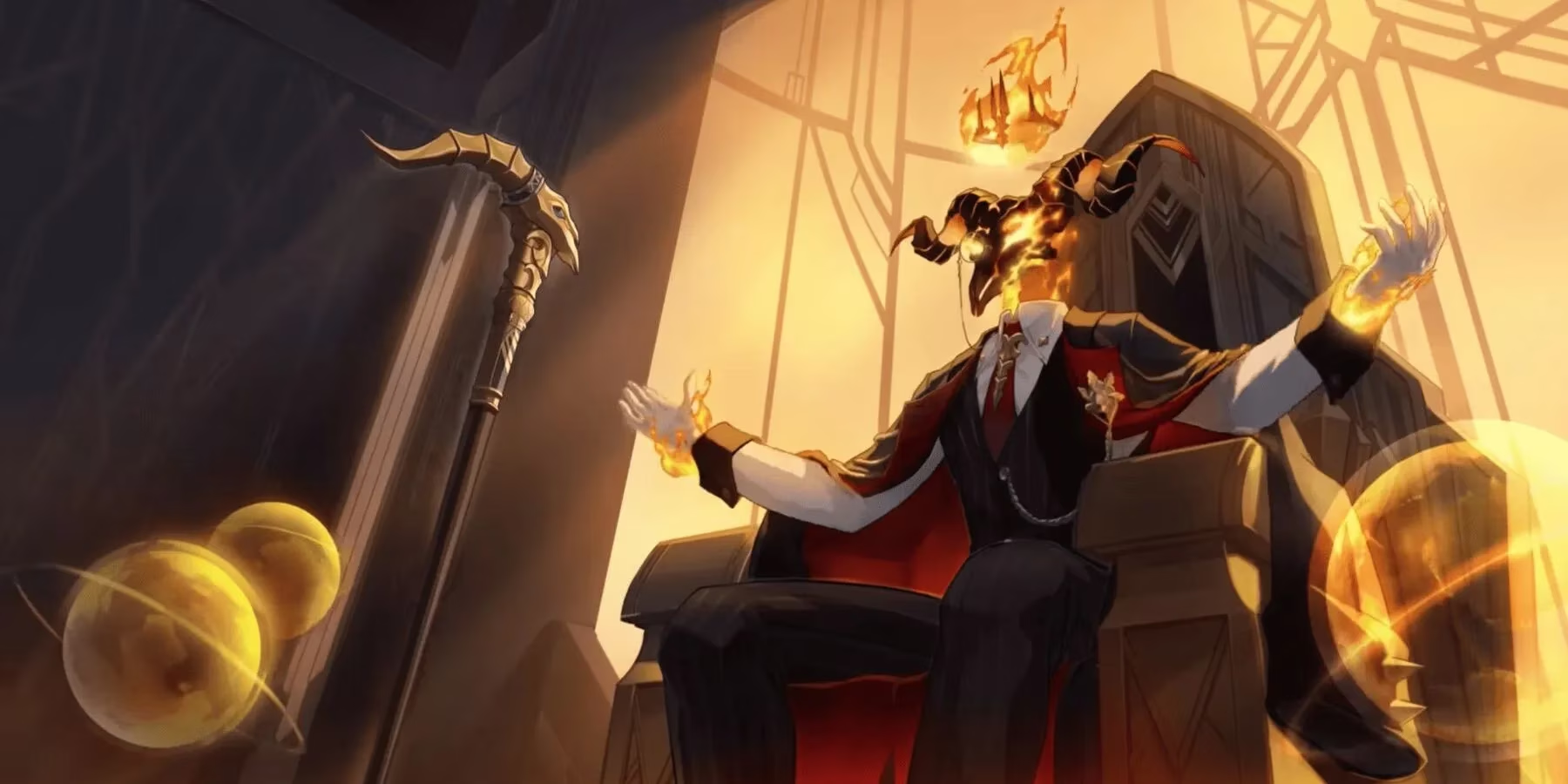
The world of Honkai: Star Rail has always thrived on weaving cinematic storytelling with thrilling turn-based combat, but the introduction of the Annihilation Gang during the Penacony arc sent ripples through the community that continue to echo well into 2026. Led by the enigmatic Duke Inferno, this villainous ensemble – comprised of Akash, Dubra, Caterina, and Constance – immediately drew comparisons to another iconic quartet: the Four Lords from Resident Evil Village. What started as a fan observation back in early 2024 has since evolved into a fascinating case study in how HoYoverse might have taken a page from Capcom’s playbook to deliver some of the most memorable boss encounters in recent memory.
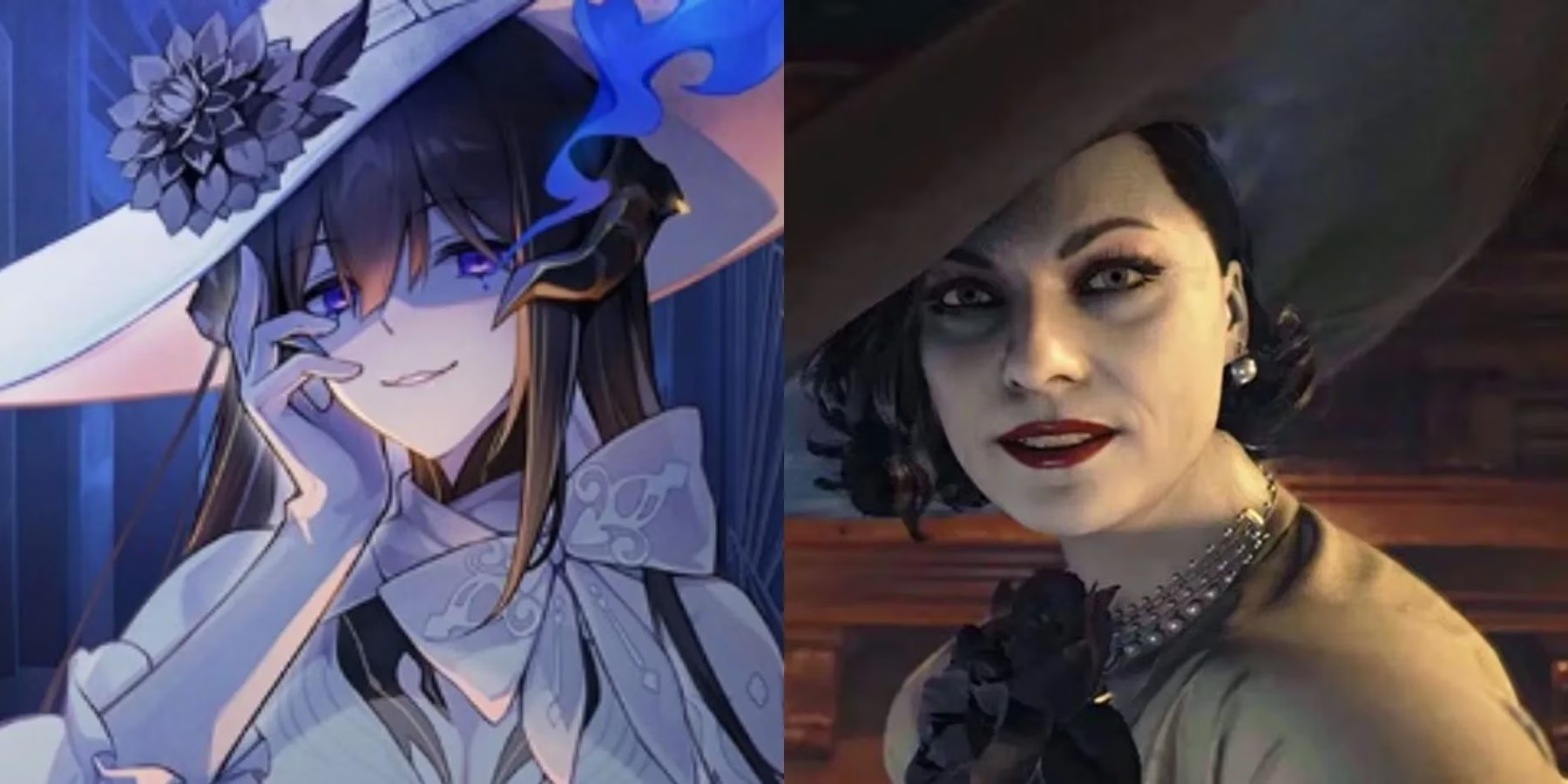
The Annihilation Gang are devotees of Nanook the Destruction, yet they remain outcasts among the Aeon’s followers. Their thirst for annihilation is described as “not pure enough” to earn true favor, a tragic irony that fuels their ruthlessness. Even before their full in-game debut, fans noted how the gang’s structure mirrored the cult-like leadership of Resident Evil Village’s Eastern European nightmare. Both groups feature exactly four subordinate elites, each commanding their own domain and possessing grotesque, otherworldly powers. The Four Lords – Alcina Dimitrescu, Salvatore Moreau, Donna Beneviento, and Karl Heisenberg – gained their abilities through the Mold, a biological weapon spread by Mother Miranda. In Honkai: Star Rail, the Annihilation Gang’s abilities stem from Path energy and their fanatical devotion to Nanook, but the narrative scaffolding is remarkably similar.
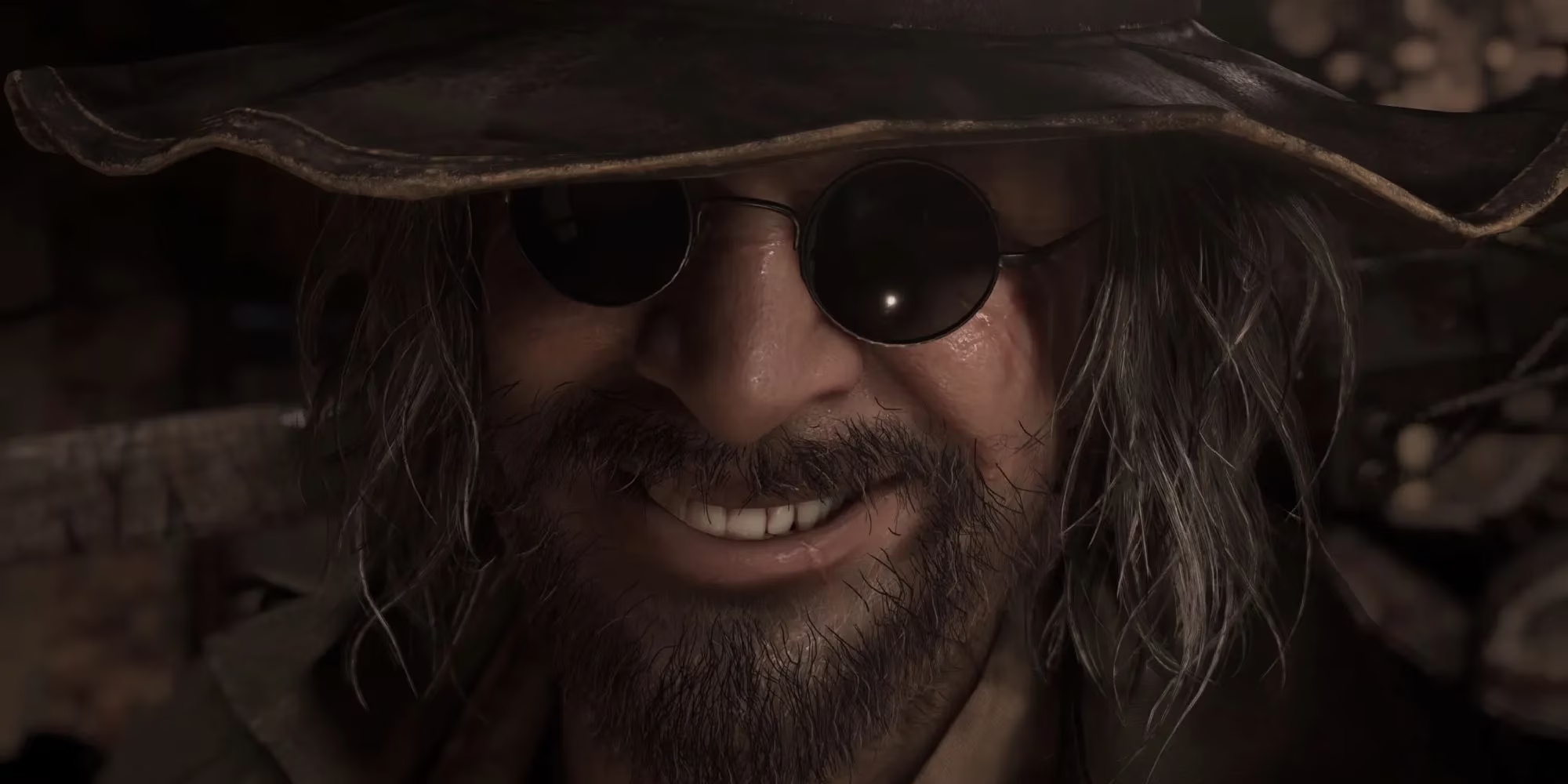
When the comparison first surfaced, speculation exploded about how HoYoverse might adapt Resident Evil Village’s stage-based boss rush format. After all, what made facing the Four Lords so compelling wasn't just their grotesque designs but the way each battle was cordoned off into a distinct, self-contained horror vignette. Lady Dimitrescu stalked players through her castle’s opulent halls; Beneviento’s dollhouse stripped away weapons for a nerve-wracking game of hide and seek; Moreau’s flooded reservoir demanded frantic resource management; and Heisenberg’s factory was a metalworks playground filled with traps and combat puzzles. The genius of that design was its simplicity: never leaving the village, Ethan Winters conquered one lord after another until the final confrontation with Miranda. Honkai: Star Rail had all the ingredients to replicate this structure within the Ever-Flame Mansion – the Annihilation Gang’s rumored headquarters – and as the game expanded through 2024, 2025, and into 2026, it gradually did just that.
By the time Penacony’s story chapters reached their climax, each Annihilation Gang member had been given a personalized arena that felt deliberately segmented from the rest of the map. Akash’s domain emphasized time-bending mechanics that echoed Beneviento’s psychological horror, albeit with a sci-fi twist. Dubra took a page from the Beneviento playbook by deploying a child-like puppet that players had to outsmart in a battle of misdirection, though the encounter avoided any direct one-to-one copy. Caterina’s challenge introduced silencing attacks and debuff cascades that forced teams to rethink their compositions mid-fight, reminiscent of Moreau’s environment-induced helplessness. Constance – Duke Inferno’s “pride and joy” and widely considered the strongest of the four – delivered a multi-phase showdown in a dark ballroom where her elegance masked terrifying transformation sequences, a clear nod to the Lady Dimitrescu fight. HoYoverse even managed to incorporate boss transformations that would feel at home in a survival horror game: Cocolia and Phantylia had already set the precedent for multi-form bosses, but the Annihilation Gang’s metamorphoses pushed the envelope further, with organic and mechanical abominations erupting from humanoid shells.
By 2026, community retrospectives often highlight how the Annihilation Gang’s individual lairs became the emotional core of Penacony’s extended storyline. Much like the Four Lords, each member was given a tragic backstory that could be uncovered through environment storytelling, collectible logs, and optional sidequests. Akash’s fall from grace, Dubra’s shattered innocence, Caterina’s obsession with purity, and Constance’s twisted devotion to Duke Inferno all added layers of pathos that made the eventual battles more than simple roadblocks. Players were effectively exploring a gallery of broken souls, a narrative technique that Resident Evil Village perfected by giving each lord a distinct trauma connected to Mother Miranda’s experiments. This emotional scaffolding allowed HoYoverse to raise the difficulty significantly without alienating casual players, because the stakes felt personal. Constance, in particular, became a fan-favorite boss not just for her challenging mechanics but for the somber realization that her pride was her prison – a mirror to Dimitrescu’s own tragic vanity.
Importantly, the parallels never descended into plagiarism. Honkai: Star Rail kept its own identity firmly intact. While Resident Evil Village relied on survival-horror resource scarcity, HoYoverse translated the concept into its turn-based system by introducing limited-use abilities, escalating environmental hazards, and sanity-like debuffs that forced players to manage more than just health bars. The hide-and-seek element of Beneviento’s segment was reimagined as a strategic puzzle where players had to bait Dubra’s puppet into traps using positional awareness, a refreshing departure from the usual damage-race meta. These homages were transparent enough to make horror fans smile but distinct enough to stand on their own.
The payoff was remarkable. Through 2025 and into 2026, player engagement with the Penacony epilogue maps surged as completionists worked to uncover all the lore fragments tied to the Annihilation Gang. Speculation about Duke Inferno himself became a subculture, with dataminers and theorists combing through each update for hints about whether he would ever become a playable character – a question that still hangs in the air as of early 2026. Some of the gang members did make the leap from NPC to playable roster, with Constance’s banner breaking revenue records in late 2025 after a lengthy build-up. The decision to release Akash and Dubra as 4-star units catered to free-to-play fans, while the remaining members remain the subject of intense anticipation.
Looking back, the decision to model the Annihilation Gang after the Four Lords was a masterstroke. It gave Honkai: Star Rail a blueprint for delivering cinematic, self-contained boss encounters within a live-service framework without exhausting the main story’s momentum. By interweaving tragic backstories, gothic ambience, and mechanical variety, HoYoverse ensured that even in 2026, the Ever-Flame Mansion and its inhabitants are remembered not just as obstacles but as some of the most haunting set pieces the game has ever produced. As the narrative shifts toward new Aeons and uncharted worlds, the shadow of Resident Evil Village’s influence will likely remain a benchmark for how to craft unforgettable antagonists in the gacha genre. And for fans who never set foot in Lady Dimitrescu’s castle, the Annihilation Gang offered a comparable thrill – proof that great ideas can resonate across galaxies of difference.