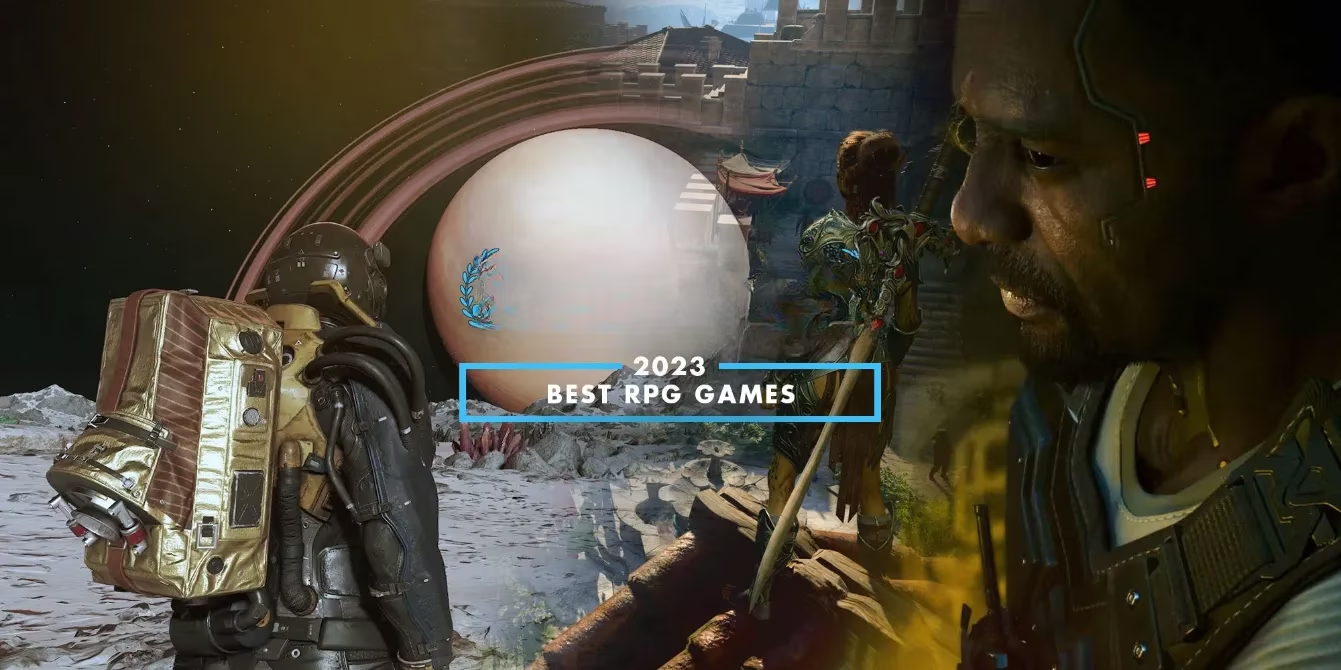
Even from the perspective of 2026, the role-playing game releases of 2023 remain a landmark collection. That year asked players to survive cursed roads, lead heroes across retro-inspired seas, navigate wizard school, explore the stars, and unravel a mind flayer conspiracy. It was a year when genres collided and long-running franchises reinvented themselves. What follows is a descriptive tour through the ten titles that defined the moment.
| Rank | Game | Defining Strength |
|---|---|---|
| 10 | Honkai: Star Rail | Generous free-to-play adventure with anime-inspired combat |
| 9 | Diablo 4 | Accessible action RPG with seasonal depth and crossplay |
| 8 | Darkest Dungeon 2 | A grim stagecoach journey with theatrical narration |
| 7 | Sea of Stars | Retro 16-bit charm with sun-and-moon magic |
| 6 | Hogwarts Legacy | A detailed Wizarding World brought to life |
| 5 | Final Fantasy 16 | Cinematic action combat and political intrigue |
| 4 | Starfield | Expansive space exploration and faction storytelling |
| 3 | Cyberpunk 2077: Phantom Liberty | A redemption arc led by spies and moral dilemmas |
| 2 | Lies of P | A refined Soulslike built around truth and lies |
| 1 | Baldur’s Gate 3 | A tabletop-inspired epic where every choice matters |
10. Honkai: Star Rail
The opening pick felt like a gift to players who wanted a polished role-playing journey without an upfront price. Honkai: Star Rail offered more than fifty hours of content while remaining genuinely friendly as a free-to-play title. Its turn-based combat asked for satisfying strategic thinking, and when a battle went wrong, the game often suggested ways to improve. Side quests gave players choices that changed smaller stories, even if the main plot stayed on a fixed path. The visual style made combat feel like a high-budget anime scene.
9. Diablo 4
At number nine, Diablo 4 delivered a sinful delight. Lilith stood out as one of the year’s most memorable villains, and the world of Sanctuary felt grim, atmospheric, and inviting all at once. Classes had distinct identities, and players could experiment with different builds for dozens of hours. The campaign was only the beginning: Helltides, World Bosses, and max-level content opened once the story concluded. Crossplay meant friends could join the slaughter no matter their platform.
8. Darkest Dungeon 2
Darkest Dungeon 2 avoided being a predictable retread. The sequel reimagined the first game from front to back, trading a familiar base for a haunted stagecoach journey through dread-inspiring regions. The art design oozed style, and the dramatic narration added a theatrical weight that made every failure and success feel significant. The early hours could punish relentlessly, but later systems opened into a masterclass of character customization and progression.
7. Sea of Stars
Retro radiance filled Sea of Stars. The game honored its 16-bit influences while telling an original, engaging story. Its soundtrack was beautiful and varied, and puzzles balanced thoughtful challenge with simplicity. Boss fights often felt like puzzles themselves once players settled into the rhythm. Protagonists wielding the powers of the sun and moon gave the nearly thirty-hour adventure a mythic energy.
6. Hogwarts Legacy
For Wizarding World fans, Hogwarts Legacy was a dream come true. The castle’s recreation paid attention to the smallest details, and flying around the grounds felt unlike anything else in gaming. The main story was not especially unpredictable, but it remained enjoyable. Players could even walk a darker path if they wished. Hogwarts, Hogsmeade, and the sorting ceremony all felt authentic, making this one of the year’s strongest representations of magic.
5. Final Fantasy 16
Final Fantasy 16 traded turn-based combat for action, and the bold change worked. Battles became lightshows as Clive mixed powers, but the system demanded strategy rather than button-mashing. The setting was stunning, the soundtrack elevated every encounter, and a Game of Thrones-inspired political intrigue gave the tale extra weight. Clive had heart, and the supporting cast helped bring the world alive.
4. Starfield
Starfield inspired strong opinions, but beneath the chatter sat a fun and imaginative role-playing game. The main quest was relatively short, yet side stories and faction threads provided some of Bethesda’s best storytelling. Ship customization made each vessel feel personal, while New Game Plus added new layers to the narrative. The many subsystems could feel overwhelming at first, but they rewarded players who committed to the full galactic tour.
3. Cyberpunk 2077: Phantom Liberty
Cyberpunk 2077 had a rocky launch, but the 2.0 update and Phantom Liberty fulfilled many promises. Idris Elba delivered a memorable performance as Solomon Reed, and Keanu Reeves returned as Johnny Silverhand. Dogtown felt complex, and its moral dilemmas ran through both main and side stories. The expansion added a significant new ending to the base game and gave newcomers the perfect reason to enter Night City.
2. Lies of P
Lies of P became the Soulslike to beat. Its level design leaned linear, but the environments were as beautiful as they were haunting. Boss encounters could push players to their knees dozens of times before victory arrived. The story was worn openly, a twisted take on Pinocchio where choices between lying and telling the truth changed the journey in mysterious ways. It claimed second place with 31% of the vote.
1. Baldur’s Gate 3
Larian’s Baldur’s Gate 3 stood at the top. From character creation to the final encounter, every choice mattered, and the web of narrative threads invited players to untangle consequences for months and years. The main story and side quests twisted through decisions that kept tension high. Companions often stole the show with their growth and memorable personalities, and the combat remained engaging while the lore encouraged deeper digging. It took first place with 69% of the vote—nice.
From the stagecoach to the stars, these ten games formed a historic lineup. By 2026, they still represent a benchmark for what modern role-playing games can accomplish.